Buy kohlenhydrate.eu ?
We are moving the project
kohlenhydrate.eu .
Are you interested in purchasing the domain
kohlenhydrate.eu ?
domain@kv-gmbh.de · 0541-91531010
Buy kohlenhydrate.eu ?
What is the difference between Quantitative Economics and Economics?
Quantitative economics is a subfield of economics that focuses on using mathematical and statistical methods to analyze economic phenomena, while economics is a broader field that encompasses the study of how societies allocate scarce resources to satisfy unlimited wants. Quantitative economics emphasizes the use of data and mathematical models to understand and predict economic behavior, while economics encompasses a wider range of topics, including microeconomics, macroeconomics, international economics, and development economics. In essence, quantitative economics is a more specialized and technical approach within the broader field of economics. **
'Economics or Geography?'
Both economics and geography are important fields of study that offer unique perspectives on the world. Economics focuses on the production, distribution, and consumption of goods and services, while geography examines the physical features of the Earth and how they impact human activities. Ultimately, the choice between economics and geography depends on individual interests and career goals. Those interested in understanding global markets and financial systems may prefer economics, while those interested in environmental issues and spatial relationships may lean towards geography. Both fields offer valuable insights and can complement each other in understanding complex societal issues. **
Similar search terms for Economics
Top-Angebote
Products related to Economics:
-
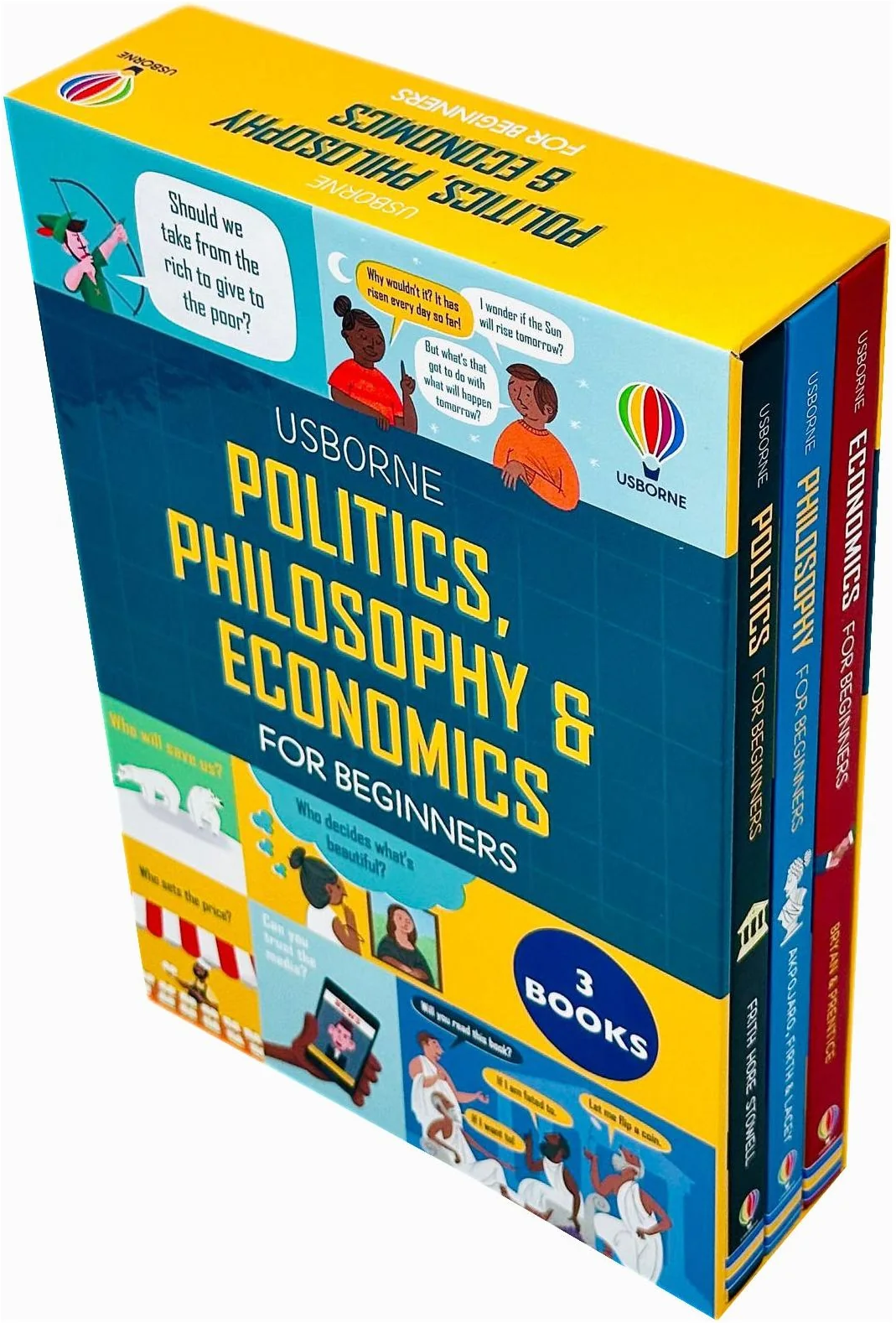
Usborne Big Subjects For Beginners 3 Books Box Set (Politics, Philosophy and Economics)Usborne Big Subjects For Beginners 3 Books Box Set (Politics, Philosophy and Economics) Economics for Beginners Nobody has everything they need, all the time - so how can we make do with what we have? Economics is all about understanding the choices we make to solve this problem. With bright, infographics pictures, this informative book describes why markets. Politics for Beginners With Brexit looming and constant political uncertainty in the UK, people are more confused by politics than ever before. Politics for Beginners answers the questions that people are afraid to ask, offering a no-nonsense guide to what politics is all about. Philosophy for Beginners Philosophy is a way of thinking about just about anything. It asks big questions, such as "how can I be good?" or "what makes something beautiful?" Using lively examples, humorous illustrations and simple thought experiments, this book opens up the world of philosophy to both children and adults and includes links to recommended. Related Tags: Usborne, Usbourne Books14,95 £*Shipping: 2,99 £Secure redirect to the provider
-
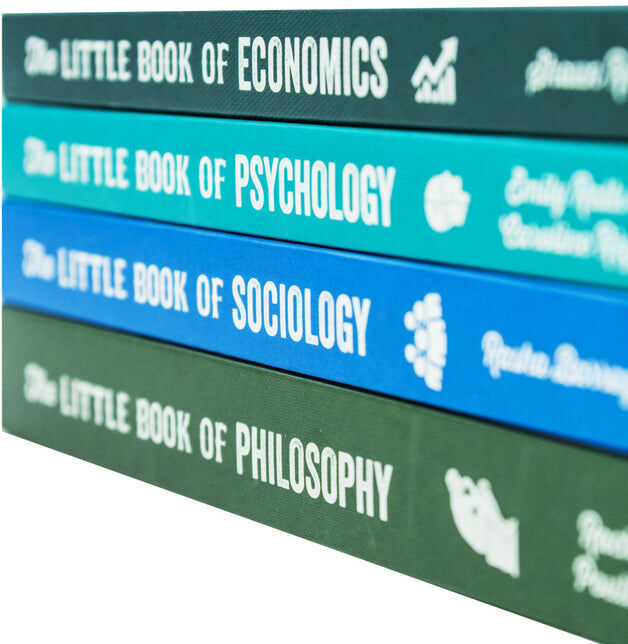
Summersdale Publishers The Little Book of Philosophy, Sociology, Economics & Psychology 4 Books Collection SetThe Little Book of Philosophy Philosophy is a quest for wisdom and knowledge; philosophia in Ancient Greek literally means “love of wisdom”. The aim of philosophy is to ask and explore life’s big questions to help us work out what we can know and how we can live a good life. Today, in a world of fake news, embarking on a quest for truth couldn’t be more important. The Little Book of Sociology From the smallest everyday interaction to the impact of vast systemic change, societies are brimming with fascinating phenomena we all want to understand more clearly.There's never been a more important moment to grasp what's going on around us, and this pocket-sized guide offers an engaging introduction to the key sociological concepts. The Little Book of Economics This Book will bring you up to speed on the basics of micro- and macroeconomics and demystify the world of taxes, trade, investments and finance, in simple English and with easy-to-follow examples.By the end of this crash course, you will have a grasp on all the essential terms, concepts and theories you need to know to understand modern-day. The Little Book of Psychology If you want to know your Freud from your Jung and your Milgram from your Maslow, strap in for this whirlwind tour of the highlights of psychology. Including accessible primers on: - The early thinkers who contributed to psychological ideas and the birth of modern psychology- Famous (and often controversial) experiments and their repercussions.12,99 £*Shipping: 2,99 £Secure redirect to the provider
-
Abacus The Undercover Economist by Tim Harford - Paperback - Popular Economics - Bestselling Non-Fiction Gift BookThe Undercover Economist by Tim Harford is a brand new paperback that turns everyday moments into vivid economics lessons. From a morning cappuccino at Waterloo Station to the housing ladder, Harford shows economics as the stuff of daily life, not distant theory. Written in clear, witty prose and free of jargon or equations, this book is ideal for curious readers, students, teachers, and anyone looking for a genuinely accessible introduction to how markets really work. In The Undercover Economist, Tim Harford asks the questions that ordinary life throws up and answers them with the tools of economic thinking. Who really profits from your morning coffee? Why does buying a house in a good area cost so much, and who benefits from that scarcity? Why do secondhand cars get such a bad reputation, and what does that reveal about information and trust in any market?7,99 £*Shipping: 2,99 £Secure redirect to the provider
-
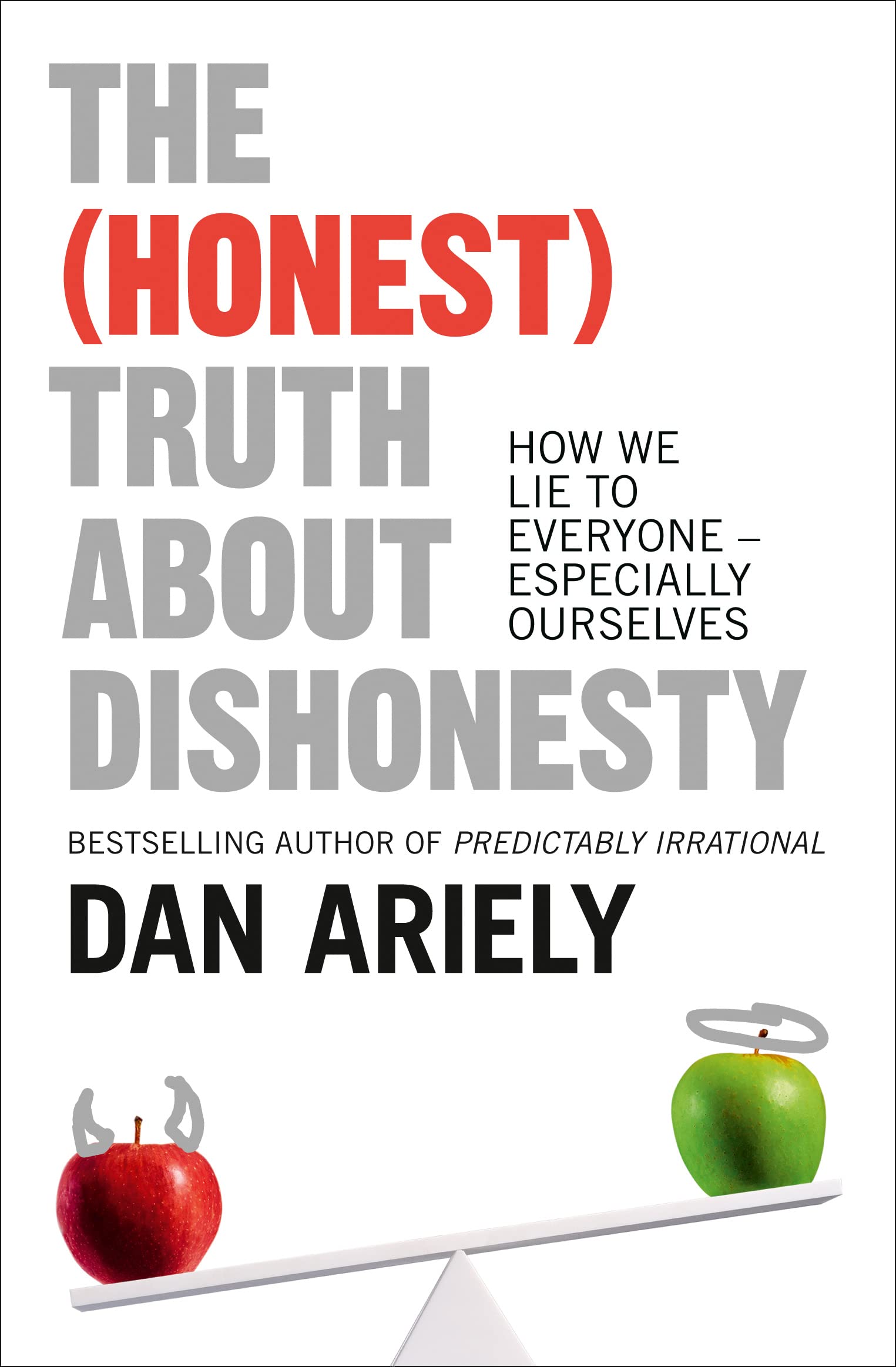
HarperCollins The (Honest) Truth About Dishonesty by Dan Ariely - Paperback - Behavioural Economics & Psychology - UK EditionExplore the fascinating world of human behavior with Dan Ariely's thought-provoking book, The (Honest) Truth About Dishonesty. This insightful non-fiction paperback delves into the psychology behind everyday deceptions, revealing the surprising reasons why ordinary people cheat and lie. Drawing on years of research in behavioural economics, Ariely's witty and engaging writing style makes this book an essential read for anyone interested in understanding human nature. Published by HarperCollins, this paperback is a compelling exploration of why we behave the way we do, and is the perfect addition to any book collection.5,95 £*Shipping: 2,99 £Secure redirect to the provider

-
Why study economics?
Studying economics is important because it helps us understand how individuals, businesses, and governments make decisions about allocating resources. It provides insights into how markets function, how policies impact the economy, and how to address issues like poverty, inequality, and unemployment. Economics also equips us with analytical and critical thinking skills that are valuable in a wide range of careers, from finance and business to public policy and international relations. Ultimately, studying economics can help us make informed decisions, both in our personal lives and in shaping public policies for the betterment of society. **
-
What is economics?
Economics is the study of how individuals, businesses, and governments allocate resources to satisfy their needs and wants. It examines how goods and services are produced, distributed, and consumed in a society. Economics also analyzes the behavior of markets, the impact of government policies, and the factors that influence economic growth and development. Overall, economics provides a framework for understanding and making decisions about the allocation of scarce resources in a world of unlimited wants. **
-
Should I study economics, political economics, business administration or law?
The answer to this question depends on your interests and career goals. If you are interested in understanding how economies function and the impact of policies on society, then studying economics or political economics would be a good choice. If you are more interested in the practical aspects of running a business, then business administration would be a better fit. If you are passionate about justice and the legal system, then studying law would be the most suitable option. Consider your strengths, interests, and long-term career aspirations to make the best decision for yourself. **
-
Should the subject Home Economics and Nutrition also be taught in higher grades?
Yes, Home Economics and Nutrition should be taught in higher grades as it provides valuable life skills that are essential for independent living. As students grow older, they will soon be responsible for their own meals and household management, making it important to have a strong foundation in these areas. Additionally, learning about nutrition can help students make informed choices about their diet and overall health, leading to a healthier lifestyle in the long run. **
What study programs are available in the field of nutrition and home economics?
Study programs available in the field of nutrition and home economics include undergraduate degrees in Nutrition Science, Dietetics, Food Science, and Human Nutrition. Graduate programs such as Master's degrees in Nutrition and Dietetics, as well as PhD programs in Nutrition and Food Science, are also available. Additionally, there are certificate programs in areas such as Culinary Arts, Food Service Management, and Community Nutrition. These programs provide students with the knowledge and skills needed to pursue careers in nutrition, food science, dietetics, and other related fields. **
What is the technical college entrance qualification in business, nutrition, and home economics?
The technical college entrance qualification in business, nutrition, and home economics is typically a high school diploma or equivalent. Some technical colleges may also require specific courses or grades in subjects related to business, nutrition, or home economics. Additionally, some programs may have additional entrance exams or requirements to assess the applicant's knowledge and skills in these areas. Overall, the technical college entrance qualification ensures that students have the necessary foundation to succeed in their chosen field of study. **
Top-Angebote
Products related to Economics:
-
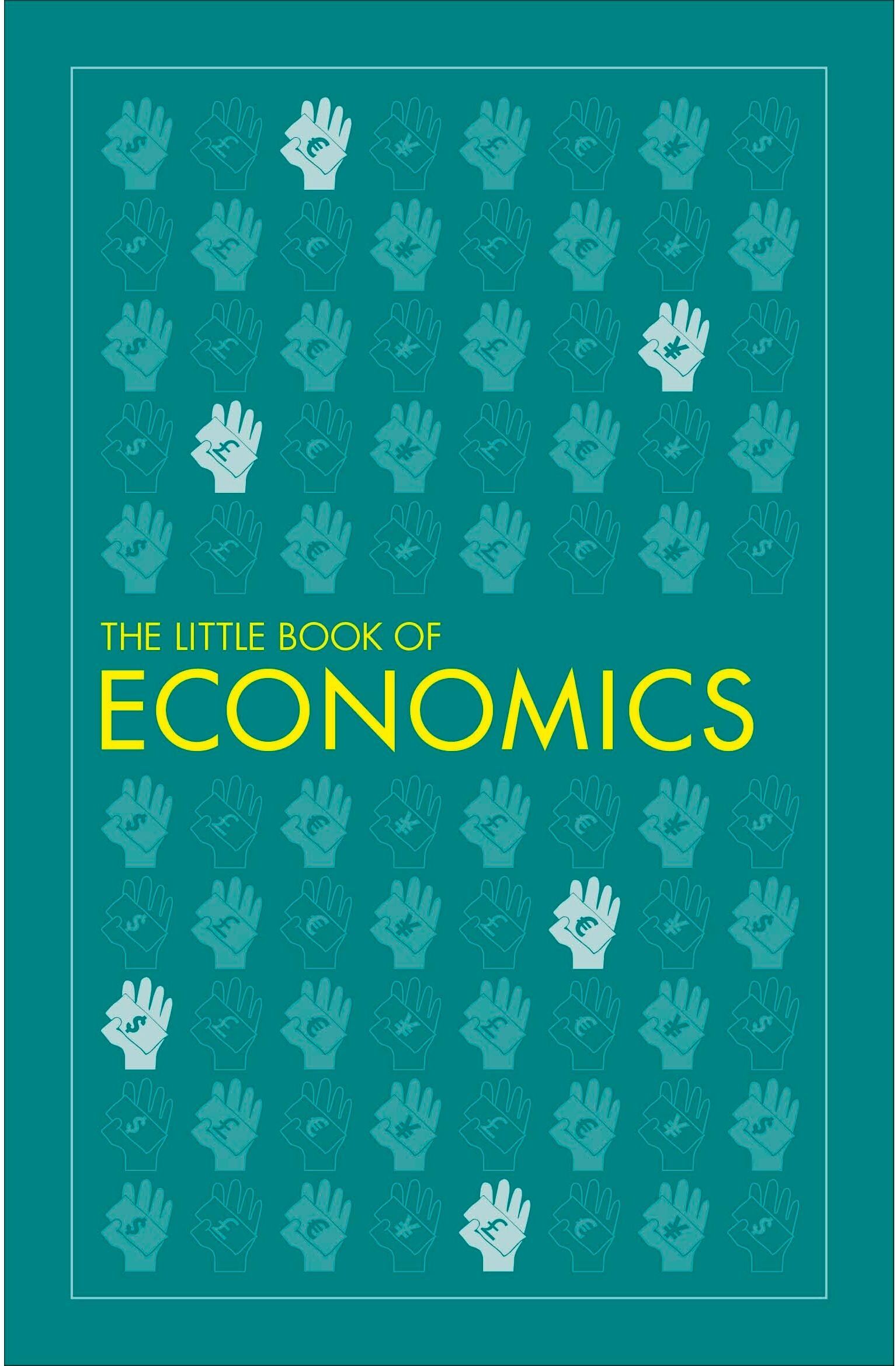
The Little Book of Economics (DK Big Ideas Series)This book is the perfect introduction to the subject of economics and economic ideas through history. From the earliest forms of currency to the Industrial Revolution, and from the birth of the stock market to free-market capitalism and globalized trade, The Little Book of Economics brings economic theory and the work of key economists to life. Journeying through centuries of economic thought, it is the perfect pocket-sized guide to the subject. Packed with infographics and flowcharts that explain complex concepts clearly and simply, The Little Book of Economics offers you a combination of clear text and hard-working infographics in a portable format that is perfect for reading on the go.5,99 £*Shipping: 2,99 £Secure redirect to the provider
-
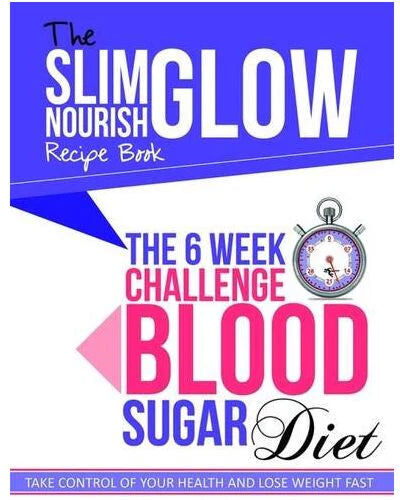
Zoblit Ltd The 6 Week Challenge Blood Sugar Diet by Cook Vitality - Paperback Diet & Recipe Book for Balancing Blood Sugar and EnergyThe 6 Week Challenge Blood Sugar Diet by Cook Vitality is a practical, beginner-friendly guide to managing blood sugar through everyday meals. This paperback book combines simple recipes, grocery lists, and clear nutrition guidance to help readers build steady energy and healthier habits. The book is designed for busy households and provides approachable language, realistic meal ideas, and portion guidance to make diet change more accessible. It lays out a clear, step-by-step six-week programme centred on stable blood sugar, sustained energy, and long-term healthy eating habits. Each stage of the plan introduces a focus area, such as protein-rich breakfasts and fibre-packed meals, to help readers take control of their blood sugar and overall wellbeing.4,49 £*Shipping: 2,99 £Secure redirect to the provider
-
Usborne Big Subjects For Beginners 3 Books Box Set (Politics, Philosophy and Economics)Usborne Big Subjects For Beginners 3 Books Box Set (Politics, Philosophy and Economics) Economics for Beginners Nobody has everything they need, all the time - so how can we make do with what we have? Economics is all about understanding the choices we make to solve this problem. With bright, infographics pictures, this informative book describes why markets. Politics for Beginners With Brexit looming and constant political uncertainty in the UK, people are more confused by politics than ever before. Politics for Beginners answers the questions that people are afraid to ask, offering a no-nonsense guide to what politics is all about. Philosophy for Beginners Philosophy is a way of thinking about just about anything. It asks big questions, such as "how can I be good?" or "what makes something beautiful?" Using lively examples, humorous illustrations and simple thought experiments, this book opens up the world of philosophy to both children and adults and includes links to recommended. Related Tags: Usborne, Usbourne Books14,95 £*Shipping: 2,99 £Secure redirect to the provider
-
Summersdale Publishers The Little Book of Philosophy, Sociology, Economics & Psychology 4 Books Collection SetThe Little Book of Philosophy Philosophy is a quest for wisdom and knowledge; philosophia in Ancient Greek literally means “love of wisdom”. The aim of philosophy is to ask and explore life’s big questions to help us work out what we can know and how we can live a good life. Today, in a world of fake news, embarking on a quest for truth couldn’t be more important. The Little Book of Sociology From the smallest everyday interaction to the impact of vast systemic change, societies are brimming with fascinating phenomena we all want to understand more clearly.There's never been a more important moment to grasp what's going on around us, and this pocket-sized guide offers an engaging introduction to the key sociological concepts. The Little Book of Economics This Book will bring you up to speed on the basics of micro- and macroeconomics and demystify the world of taxes, trade, investments and finance, in simple English and with easy-to-follow examples.By the end of this crash course, you will have a grasp on all the essential terms, concepts and theories you need to know to understand modern-day. The Little Book of Psychology If you want to know your Freud from your Jung and your Milgram from your Maslow, strap in for this whirlwind tour of the highlights of psychology. Including accessible primers on: - The early thinkers who contributed to psychological ideas and the birth of modern psychology- Famous (and often controversial) experiments and their repercussions.12,99 £*Shipping: 2,99 £Secure redirect to the provider
-
What is the difference between Quantitative Economics and Economics?
Quantitative economics is a subfield of economics that focuses on using mathematical and statistical methods to analyze economic phenomena, while economics is a broader field that encompasses the study of how societies allocate scarce resources to satisfy unlimited wants. Quantitative economics emphasizes the use of data and mathematical models to understand and predict economic behavior, while economics encompasses a wider range of topics, including microeconomics, macroeconomics, international economics, and development economics. In essence, quantitative economics is a more specialized and technical approach within the broader field of economics. **
-
'Economics or Geography?'
Both economics and geography are important fields of study that offer unique perspectives on the world. Economics focuses on the production, distribution, and consumption of goods and services, while geography examines the physical features of the Earth and how they impact human activities. Ultimately, the choice between economics and geography depends on individual interests and career goals. Those interested in understanding global markets and financial systems may prefer economics, while those interested in environmental issues and spatial relationships may lean towards geography. Both fields offer valuable insights and can complement each other in understanding complex societal issues. **
-
Why study economics?
Studying economics is important because it helps us understand how individuals, businesses, and governments make decisions about allocating resources. It provides insights into how markets function, how policies impact the economy, and how to address issues like poverty, inequality, and unemployment. Economics also equips us with analytical and critical thinking skills that are valuable in a wide range of careers, from finance and business to public policy and international relations. Ultimately, studying economics can help us make informed decisions, both in our personal lives and in shaping public policies for the betterment of society. **
-
What is economics?
Economics is the study of how individuals, businesses, and governments allocate resources to satisfy their needs and wants. It examines how goods and services are produced, distributed, and consumed in a society. Economics also analyzes the behavior of markets, the impact of government policies, and the factors that influence economic growth and development. Overall, economics provides a framework for understanding and making decisions about the allocation of scarce resources in a world of unlimited wants. **
Similar search terms for Economics
-
Abacus The Undercover Economist by Tim Harford - Paperback - Popular Economics - Bestselling Non-Fiction Gift BookThe Undercover Economist by Tim Harford is a brand new paperback that turns everyday moments into vivid economics lessons. From a morning cappuccino at Waterloo Station to the housing ladder, Harford shows economics as the stuff of daily life, not distant theory. Written in clear, witty prose and free of jargon or equations, this book is ideal for curious readers, students, teachers, and anyone looking for a genuinely accessible introduction to how markets really work. In The Undercover Economist, Tim Harford asks the questions that ordinary life throws up and answers them with the tools of economic thinking. Who really profits from your morning coffee? Why does buying a house in a good area cost so much, and who benefits from that scarcity? Why do secondhand cars get such a bad reputation, and what does that reveal about information and trust in any market?7,99 £*Shipping: 2,99 £Secure redirect to the provider
-
HarperCollins The (Honest) Truth About Dishonesty by Dan Ariely - Paperback - Behavioural Economics & Psychology - UK EditionExplore the fascinating world of human behavior with Dan Ariely's thought-provoking book, The (Honest) Truth About Dishonesty. This insightful non-fiction paperback delves into the psychology behind everyday deceptions, revealing the surprising reasons why ordinary people cheat and lie. Drawing on years of research in behavioural economics, Ariely's witty and engaging writing style makes this book an essential read for anyone interested in understanding human nature. Published by HarperCollins, this paperback is a compelling exploration of why we behave the way we do, and is the perfect addition to any book collection.5,95 £*Shipping: 2,99 £Secure redirect to the provider
-
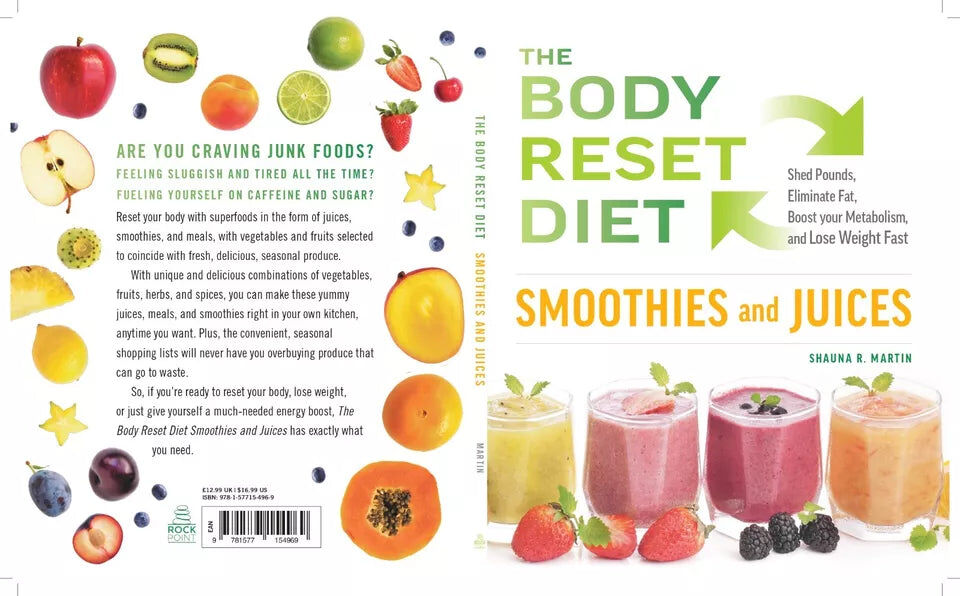
Rock Point The Body Reset Diet Smoothies and Juices by Shauna R. Martin - Paperback Diet & Nutrition Cookbook for Weight Loss and EnergyThe Body Reset Diet Smoothies and Juices by Shauna R. Martin is a practical guide to help you reset your cravings, boost energy, and support a healthier weight. This brand-new paperback book is packed with vibrant juice, smoothie, and light-meal recipes built around fresh, seasonal produce. The recipes are organized around what's in season, making it easy to incorporate healthy eating into your daily routine. Shauna R. Martin pairs vegetables and fruits with herbs and spices to create juice and smoothie combinations that are genuinely enjoyable and help curb junk-food cravings while delivering lasting, natural energy. This book is ideal for anyone looking to start a wellness journey or for busy households and gift buyers.2,99 £*Shipping: 2,99 £Secure redirect to the provider
-
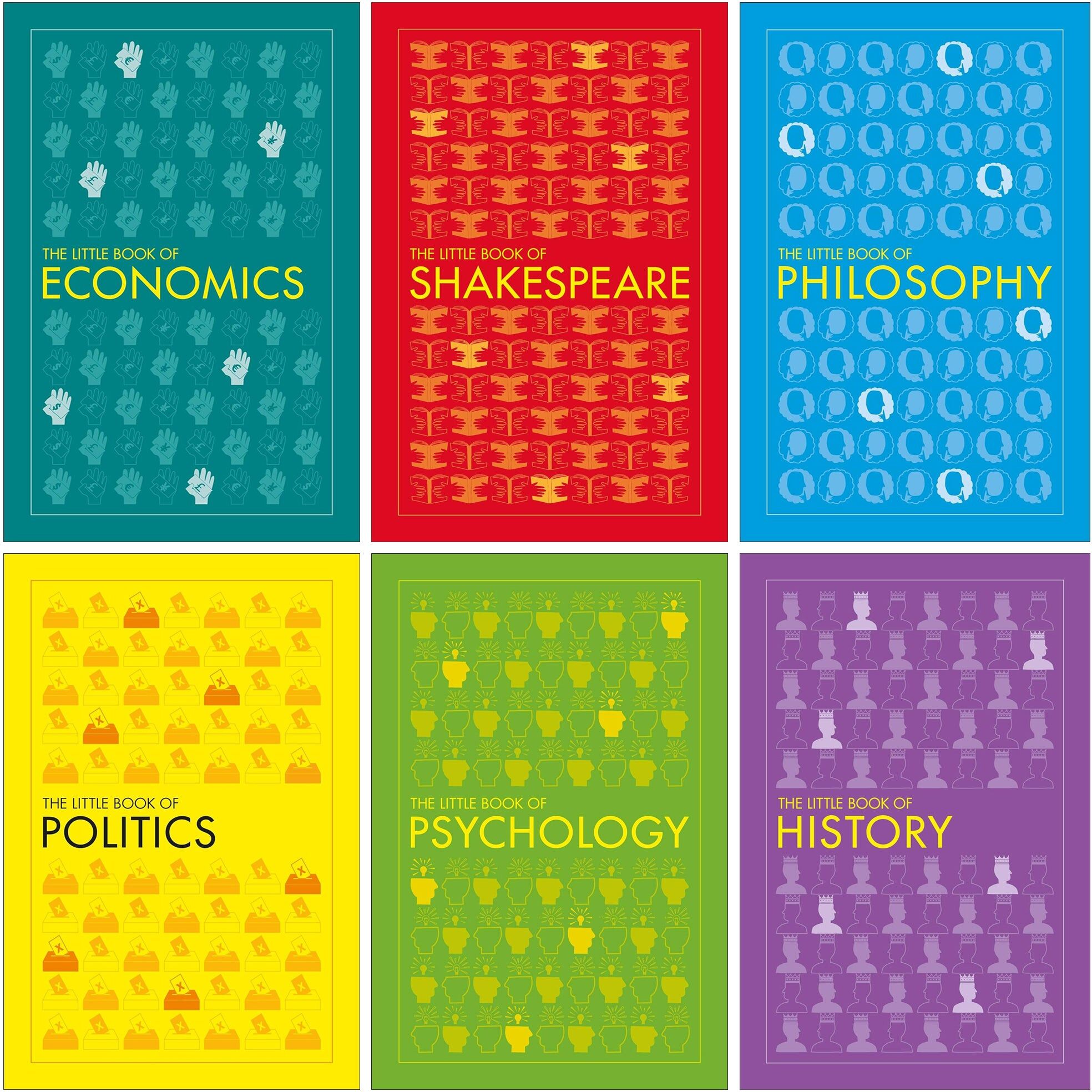
DK The Little Book Of Series 6 Books Collection Set (Economics, Politics, Shakespeare, Philosophy, Psychology, History)The Little Book Of Economics From the earliest forms of currency to the Industrial Revolution, and from the birth of the stock market to free-market capitalism and globalized trade, The Little Book of Economics brings economic theory and the work of key economists to life. Journeying through centuries of economic thought, it is the perfect pocket-sized guide to the subject. The Little Book Of Politics From the origins of democracy to Machiavelli's cunning statecraft, and from Rousseau's "social contract" to the American Declaration of Independence, Marxist communism, the dawn of populism, and identity politics, The Little Book of Politics examines the philosophies behind the different political beliefs and methods of government used around the world over the course of human history. The Little Book Of Shakespeare This bold book covers every work, from the comedies of Twelfth Night and As You Like It to the tragedies of Julius Caesar and Hamlet, plus lost plays and less well-known works of poetry. Easy-to-understand graphics and illustrations bring the themes, plots, characters and language of Shakespeare to life, including illustrated timelines which offer an at-a-glance summary of the action for each play. With detailed plot summaries and an in-depth analysis of the major characters and themes, this is a brilliant, innovative exploration of the entire canon of Shakespeare plays, sonnets and poetry. The Little Book Of Philosophy To the complete novice learning about philosophy can be daunting - The Little Book of Philosophy changes all that. With the use of powerful and easy-to-follow images, famous quotations, and explanations that are easily understandable, this book cuts through any misunderstandings to demystify the subject. The Little Book Of Psychology DK's The Little Book of Psychology answers all these questions and provides an insight into this fascinating field of science. Whether you are a student, an expert, a novice, or have a general interest in the human mind, this portable guide is the perfect choice to start exploring and understanding psychology. The Little Book Of History The Little Book of History charts world history from the dawn of civilisation to the modern culture we live in today. From the origins of homo-sapiens to the release of Nelson Mandela, from the French Revolution to the Space Race, The Little Book of History is a stunning exploration of the human timeline up to and including modern Islam, the world wide web, and the global financial crisis.14,99 £*Shipping: 2,99 £Secure redirect to the provider
-
Should I study economics, political economics, business administration or law?
The answer to this question depends on your interests and career goals. If you are interested in understanding how economies function and the impact of policies on society, then studying economics or political economics would be a good choice. If you are more interested in the practical aspects of running a business, then business administration would be a better fit. If you are passionate about justice and the legal system, then studying law would be the most suitable option. Consider your strengths, interests, and long-term career aspirations to make the best decision for yourself. **
-
Should the subject Home Economics and Nutrition also be taught in higher grades?
Yes, Home Economics and Nutrition should be taught in higher grades as it provides valuable life skills that are essential for independent living. As students grow older, they will soon be responsible for their own meals and household management, making it important to have a strong foundation in these areas. Additionally, learning about nutrition can help students make informed choices about their diet and overall health, leading to a healthier lifestyle in the long run. **
-
What study programs are available in the field of nutrition and home economics?
Study programs available in the field of nutrition and home economics include undergraduate degrees in Nutrition Science, Dietetics, Food Science, and Human Nutrition. Graduate programs such as Master's degrees in Nutrition and Dietetics, as well as PhD programs in Nutrition and Food Science, are also available. Additionally, there are certificate programs in areas such as Culinary Arts, Food Service Management, and Community Nutrition. These programs provide students with the knowledge and skills needed to pursue careers in nutrition, food science, dietetics, and other related fields. **
-
What is the technical college entrance qualification in business, nutrition, and home economics?
The technical college entrance qualification in business, nutrition, and home economics is typically a high school diploma or equivalent. Some technical colleges may also require specific courses or grades in subjects related to business, nutrition, or home economics. Additionally, some programs may have additional entrance exams or requirements to assess the applicant's knowledge and skills in these areas. Overall, the technical college entrance qualification ensures that students have the necessary foundation to succeed in their chosen field of study. **
* All prices are inclusive of VAT and, if applicable, plus shipping costs. The offer information is based on the details provided by the respective shop and is updated through automated processes. Real-time updates do not occur, so deviations can occur in individual cases. ** Note: Parts of this content were created by AI.